
Fuel Delivery
Out of Gas? We Bring Enough to Reach the Pump
The engine sputtered, surged, and quit with the gauge on empty. Get fully off the road, hazards on, and call Emergency Mobile Tire Repair. We bring enough fuel to get you to a station, not a full tank.
- A bridge to the nearest pump, where you fill up
- Gas or diesel: tell us what the car takes before anyone rolls
- Stay belted in the car if traffic is close to the shoulder
Did you run dry?
The Signs You Ran Out of Fuel
Running out of fuel rarely happens all at once. The engine hesitates on a curve as the last fuel sloshes away from the pickup. Then it surges, sputters, and stalls. The starter spins without the engine catching, and the low fuel light has been on for a while.
Those signs matter because a car with fuel in the tank that will not start is a different problem. If the gauge reads a quarter tank and the engine cranks without catching, fuel is not the fix.
Fuel delivery here means one thing. We bring enough fuel to reach the nearest pump, and you fill the tank there. It is a bridge to the station, not a fill-up.
Fuel or something else
Is It the Tank, or Is It the Car?
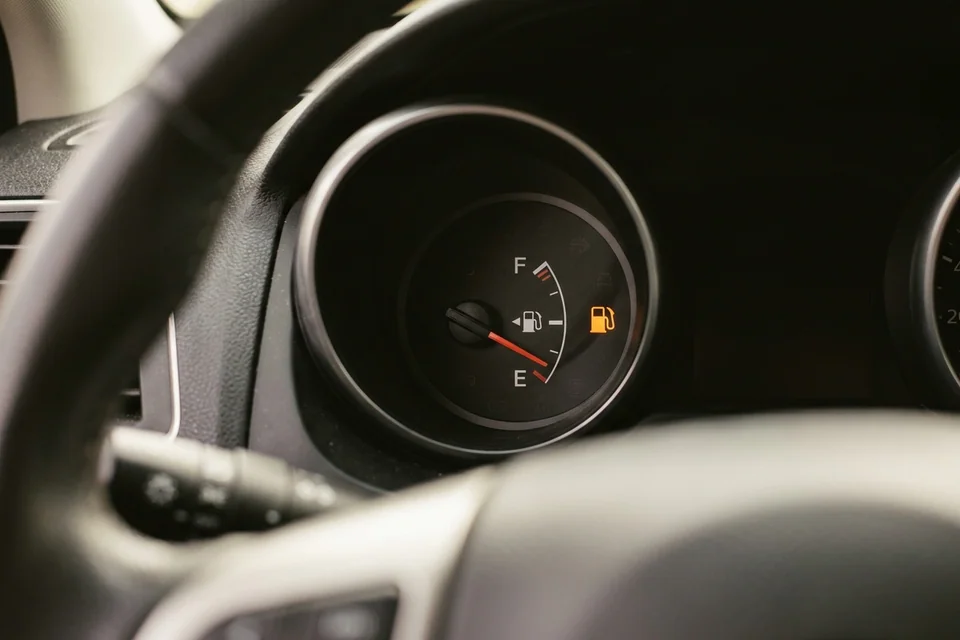
Gauge on E, light was on
The engine lost power, sputtered, and died. The starter spins but nothing catches. That is an empty tank.
Gauge says there is fuel
A quarter tank and a no-start is not a fuel problem. It could be a pump or a filter. That is a shop.
Wrong fuel went in
Gas in a diesel or diesel in a gas car is a shop job. Do not start the engine. We point you to the right help.
Starts briefly, dies again
On a slope, the last bit of fuel reaches the pickup for a moment. That still means empty.
On the call
What to Tell Us
Gas or diesel
It changes what we bring and whether we can help at all. If you are not sure, the fuel door usually says.
Exactly where you are
The road, your direction, and the last exit or mile marker. On the Turnpike, the marker is how we find you.
Learn moreThe nearest station you know of
We bring enough to reach a pump, so the distance to that pump matters.
How far off the road you are
A wide shoulder or an exit ramp is one thing. A narrow shoulder with trucks passing is another.
If the car has fuel and still will not start, or the wrong fuel went in, we say so on the call and point you to the right help.
How it works
From the Shoulder to the Pump
- 01
Get as far off the road as you can
Coast to the shoulder or an exit while the car still rolls. Hazards on. Stay belted in if traffic is close.
- 02
Call with location and fuel type
Road, direction, mile marker or exit, and gas or diesel. That is enough for us to confirm the fix.
- 03
We bring fuel to the car
You get an honest ETA depending on technician availability. Wait in the car, not on the roadside.
- 04
You drive to the nearest pump
Fill the tank there. If the engine will not catch with fuel in it, we tell you what that points to.
Decide
Walk for a Can, Wait for Fuel, or Call a Tow?
There is no wrong answer, but there is a safest one for where you are stopped.
| Criteria | Walk to a station | Wait for fuel delivery | Call a tow |
|---|---|---|---|
| Best when | A station is in sight, you are on a surface street, and there is a sidewalk | You are on a highway shoulder or far from any station, and the car is simply empty | The car has fuel and still will not start, or the wrong fuel went in |
| The safety picture | Walking along I-4, US-27, or the Turnpike is dangerous. Do not do it | You stay with the car, belted in if traffic is close | You stay with the car until the truck arrives |
| What you pay for | A can and the fuel in it, plus your time | The trip to you, plus enough fuel to reach the pump | The tow to a shop, then whatever the shop finds |
Best when
- Walk to a station
- A station is in sight, you are on a surface street, and there is a sidewalk
- Wait for fuel delivery
- You are on a highway shoulder or far from any station, and the car is simply empty
- Call a tow
- The car has fuel and still will not start, or the wrong fuel went in
The safety picture
- Walk to a station
- Walking along I-4, US-27, or the Turnpike is dangerous. Do not do it
- Wait for fuel delivery
- You stay with the car, belted in if traffic is close
- Call a tow
- You stay with the car until the truck arrives
What you pay for
- Walk to a station
- A can and the fuel in it, plus your time
- Wait for fuel delivery
- The trip to you, plus enough fuel to reach the pump
- Call a tow
- The tow to a shop, then whatever the shop finds
We explain pricing before any work begins. After-hours and long-distance jobs may vary.
Know before you call
Why Running Dry Is Hard on the Car
Why repeated run-outs harm the fuel pump
On most modern cars, the fuel pump sits inside the tank and is cooled by the fuel around it. Run the tank dry and the pump runs hot. Once, it usually survives. Make a habit of it and the pump wears early.
Sediment also settles in a tank over years. Running on the last cup pulls it into the filter, and a clogged filter is a no-start that fuel alone will not fix.
Gas versus diesel
Tell us what the car takes. We confirm on the call what we can bring for your vehicle. Some diesels will not restart after running dry until the system is primed, so say so if you drive one. If the wrong fuel went in, do not start the engine. Running it turns a drain into a repair.
Where drivers run out
- I-4 through Orlando in a backup. A crawl at idle burns more than the gauge seems to promise, and the next exit is far at walking speed
- The Turnpike between exits. Long stretches with no station and a shoulder that is not a place to walk
- Rental cars near the theme parks, where the gauge is unfamiliar and the last fill was the airport
While you wait
- Pull as far right as the shoulder allows. Hazards on. Stay belted in the car on a highway
- Do not keep cranking. You will need the battery later
Where we help, hours, and pricing
Highway shoulders where it is safe to stop, exit ramps, lots, driveways, and hotels across Lake, Orange, Osceola, Polk, Seminole, and Sumter counties. Published hours are on the contact page, and after-hours calls are answered depending on technician availability. We explain pricing before any work begins.
Fuel delivery questions
Fuel Delivery Questions
How much fuel do you bring?
Enough to get you to the nearest pump. It is a bridge to the station, not a fill-up.
Can you bring diesel?
Tell us what the car takes when you call. We confirm on the phone what we can bring for your vehicle before anyone rolls.
How fast can you arrive?
Response times vary by your location, traffic, and technician availability. Call us and we give you an honest ETA before dispatching.
What if I'm outside your normal service area?
Call anyway. Depending on time, availability, and your situation, we may make an exception or point you to the right help.
Keep reading
Related Pages
- Roadside assistanceJump starts, lockouts, and fuel.
- Jump startCranks but will not catch? Make sure it is not the battery.
- Lockout assistanceLocked the keys in at the pump? That is this page.
- Check your service areaEnter a ZIP or city to see if we cover you.
- Contact and hoursPublished hours and every way to reach us.
Stopped on Empty Right Now?
Get fully off the road, hazards on, and call Emergency Mobile Tire Repair at (352) 531-6319. Tell us the road, your direction, and whether the car takes gas or diesel. We give you an honest ETA when a technician is available.
(352) 531-6319