
Plug and patch repair
Can Your Tire Be Plugged or Patched?
Usually yes, if the hole is in the tread and no bigger than 1/4 inch. Emergency Mobile Tire Repair checks the tire where it sits. If it meets the repair rules, we fix it on site with a plug and patch. If it does not, we tell you why and help with a spare or a replacement.
- Tread area only. Shoulder and sidewall punctures are not repairable
- Puncture no larger than 1/4 inch, about 6 mm
- Plug and patch applied from inside, after the tire is dismounted and inspected
- An outside-only plug is a temporary measure, not a finished repair
- A clear answer at the car before any work starts
Plug, patch, or both
What Each Repair Actually Does
A plug is a sticky rubber cord pushed into the hole from outside. It can stop a leak for a while. But nobody looks inside the tire, so nobody knows what the nail did in there. Industry guidance treats an outside-only plug as a temporary measure.
A patch is bonded to the inner liner. On its own it seals the liner but leaves the hole open to water. The industry standard is the plug and patch combination. The tire comes off the wheel and the inside is inspected. A one-piece repair fills the hole and seals the liner.
That is the repair Emergency Mobile Tire Repair aims for when a puncture qualifies. The decision is made at the car, after inspection. If the tire fails any rule on this page, we say so and move to the next option.
We explain pricing before any work begins. Quotes are estimates until the technician sees the tire.
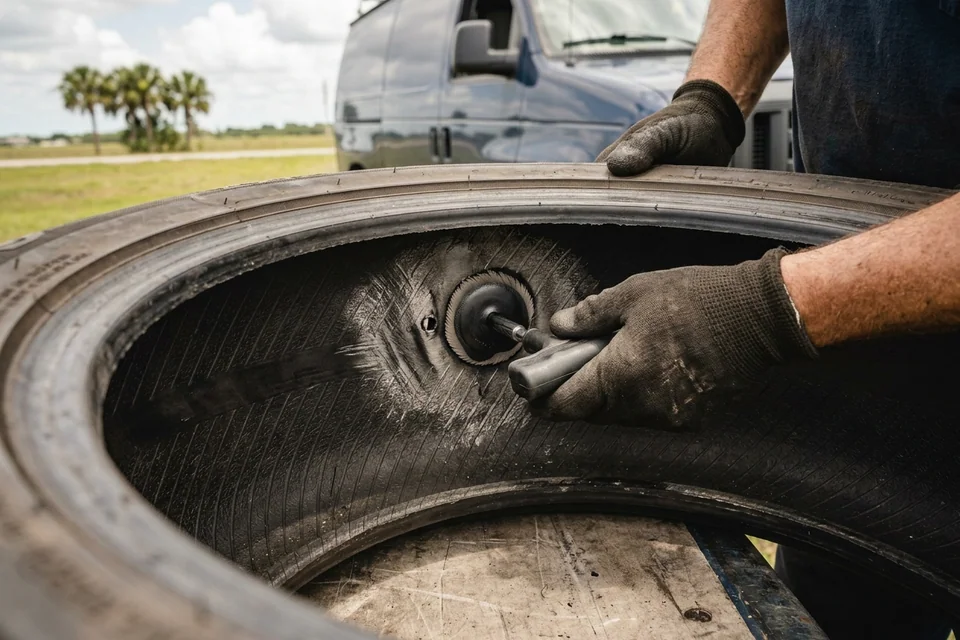
Why the rules matter
What You Get From a Repair Done Right
Every item here depends on the puncture meeting the repair rules. We say so at the car.
A repair that holds
A proper inside repair fills the hole and seals the liner. That keeps air and water out of the tire.
A straight answer
Repairable or not, you hear it before any work starts, with the reason.
Fixed where the car sits
When the puncture qualifies, the repair happens in your driveway or parking lot. No tow.
Inspected inside, not just outside
A plug pushed in from the outside skips the inspection. We look at the inside first.
No patch on a tire that should be replaced
If the damage is in the sidewall or the tire was driven flat, we do not repair it.
Send a photo first
A photo of the nail and the sidewall helps us tell you the likely outcome on the call.
The checklist
What We Check Before We Repair
Six things decide whether a puncture is repairable. The technician checks all of them at the car.
Where the hole is
Tread area only. The shoulder and sidewall flex too much for a repair to hold.
How big it is
A quarter inch, about 6 mm, is the limit. Larger holes, cuts, and gouges mean replacement.
What is inside
The tire comes off the wheel so we can see the inner liner for damage.
Tread depth
A tire worn to 2/32 inch or less is not repaired. It is due for replacement anyway.
Previous repairs
Repairs cannot overlap. A previous improper repair rules out a new one.
Was it driven flat
Driving on a flat can break down the inside of the tire. That tire is not repaired.
These limits follow published puncture repair guidance from the U.S. Tire Manufacturers Association and the Tire Industry Association. The technician applies them at the car.
How it works
From a Nail in the Tread to a Finished Repair
- 01
Call and describe the puncture
Tell us where you are and what you see. A photo of the nail and the sidewall helps us plan.
- 02
We inspect at the car
The tire is dismounted. We check the hole location, the size, the tread depth, and the inside of the tire.
- 03
Plug and patch from inside
If it qualifies, the hole is filled and the liner sealed in one repair. Then we remount, inflate, and set the pressure.
- 04
Or we move to the next option
If the tire fails a rule, we install your spare or help you arrange a replacement. You hear the reason either way.
Decide
Outside Plug, Plug and Patch, or Replacement?
Industry repair guidance sets the limits. The technician applies them at the car.
| Criteria | Outside plug only | Plug and patch combination | Replacement |
|---|---|---|---|
| Durability | Temporary. Meant to get you to a proper repair | Permanent when done to industry guidance | New tire, full service life |
| Where it applies | A small tread puncture, as a stopgap | A tread puncture up to 1/4 inch on a tire in sound condition | Sidewall or shoulder damage, large holes, driven-flat damage, worn tread |
| Inside inspection | No. The tire stays on the wheel | Yes. The tire is dismounted and the liner checked | Not needed |
| Risk | Water reaches the cords and the plug can work loose | Low when the rules are followed | None from the old damage |
| What we do on site | Not our standard. When a tire qualifies, we do the full repair | Dismount, inspect, plug and patch, remount, inflate | Install your spare, or help with a replacement tire where available |
Durability
- Outside plug only
- Temporary. Meant to get you to a proper repair
- Plug and patch combination
- Permanent when done to industry guidance
- Replacement
- New tire, full service life
Where it applies
- Outside plug only
- A small tread puncture, as a stopgap
- Plug and patch combination
- A tread puncture up to 1/4 inch on a tire in sound condition
- Replacement
- Sidewall or shoulder damage, large holes, driven-flat damage, worn tread
Inside inspection
- Outside plug only
- No. The tire stays on the wheel
- Plug and patch combination
- Yes. The tire is dismounted and the liner checked
- Replacement
- Not needed
Risk
- Outside plug only
- Water reaches the cords and the plug can work loose
- Plug and patch combination
- Low when the rules are followed
- Replacement
- None from the old damage
What we do on site
- Outside plug only
- Not our standard. When a tire qualifies, we do the full repair
- Plug and patch combination
- Dismount, inspect, plug and patch, remount, inflate
- Replacement
- Install your spare, or help with a replacement tire where available
Quotes are estimates until the technician inspects the tire. We explain pricing before work begins.
The rules
Puncture Repair Rules, Plainly
Where a tire can be repaired
Only the crown, the flat tread area that touches the road. The shoulder and sidewall flex with every turn of the wheel. A repair there works loose and can fail without warning. That is why a sidewall nail means a replacement, even when it looks small.
How big is too big
A puncture up to 1/4 inch, about 6 mm, can be repaired in the tread area. Most nails and screws fall under that limit. A bolt, a cut, or a gouge usually does not. The technician measures at the car.
Why the tire comes off the wheel
A hole can look fine from outside while the inside is damaged. The only way to know is to dismount the tire and look at the liner. The plug and patch is applied from inside, so the tire has to come off anyway.
When we say no
We do not repair a tire in these cases. We tell you plainly and move to the spare or a replacement.
- The puncture is in the shoulder or sidewall
- The hole is larger than 1/4 inch, or it is a cut or gouge rather than a puncture
- The tire was driven while flat and the inside shows damage
- Tread depth is 2/32 inch or less
- A new repair would overlap an earlier one
- The tire has a previous improper repair, such as an outside plug with no inside repair
If you already have a plug in the tire
An outside plug is a stopgap, not a finished repair. Industry guidance says a tire with a previous improper repair should not be repaired again. Call us and send a photo. We tell you at the car whether it is time for a replacement.
Questions drivers ask
Plug and Patch Questions
Do you repair tires or replace them?
Both, when safe. If the puncture is in the tread and within the size limit, we plug and patch it on site. Otherwise we help with the spare or a replacement.
Can a nail in the sidewall be patched?
No. The sidewall flexes too much for any repair to hold. A sidewall puncture means a replacement. The same goes for the shoulder, where the tread curves into the sidewall.
Is a plug enough, or do I need a patch?
A plug alone is a temporary measure. The proper repair is a plug and patch combination applied from inside. The tire is dismounted and inspected first. That is what we do when the tire qualifies.
Should I drive on a flat tire?
No. Driving on a flat damages the inside of the tire and can rule out a repair. Pull over safely, put on hazards, and call us.
Keep reading
Related Services and Pages
- Mobile tire repairWhat the service covers and how the on-site decision is made.
- Slow leak diagnosisLosing air over days? Find where it is going.
- Flat tire helpThe next five minutes, then what the technician does.
- Blowout assistanceSafety steps after a sudden failure, and why repair is off the table.
- All mobile tire servicesReplacement, spare installs, jump starts, lockouts, and fuel delivery.
- Sidewall damage guideBulges, cuts, and cracking: why the sidewall is never repaired.
- Check your service areaEnter a ZIP or city to see if we cover you.
- Contact usHours, phone, and the request form.
Not Sure If Your Tire Can Be Repaired?
Call Emergency Mobile Tire Repair and send a photo of the nail and the sidewall. We will tell you what happens next and give you an honest ETA.
(352) 531-6319