
Sidewall Damage Guide
Sidewall Damage: Drive, Limp, or Stop?
A bulge, a cut, a scuff, or cracking on the side of a tire each means something different inside it. This guide tells you which ones can wait for an inspection and which ones mean park the car now. If the tire is unsafe, call Emergency Mobile Tire Repair and we talk through spare or replacement on the call.
- A bubble or bulge means the cords inside have separated. Stop driving on it
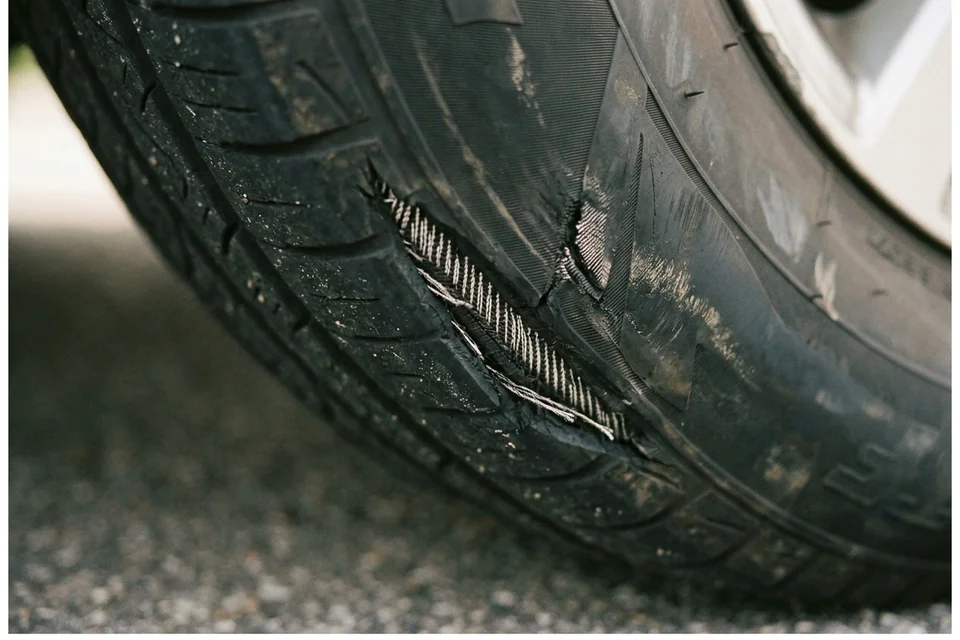
- Cords showing through a cut or scrape: do not drive on it
- A shallow scuff with no cords visible can wait for an inspection
- Sidewall damage is outside the repairable area under industry guidelines. The fix is a spare or a replacement
The short answer
What the Side of a Tire Is Telling You
The sidewall is the thinnest part of a tire. It has no steel belts, only fabric cords under rubber. It flexes with every turn of the wheel, which is why damage there is treated differently from a nail in the tread.
A bulge means air has pushed through the inner liner and is sitting between the cords and the outer rubber. The cords in that spot have separated. The tire holds air for now, but it can fail without warning, often at speed.
A cut, gouge, or deep scrape matters by depth. If you can see cords, the structure is open. If the rubber is only scuffed, the tire is a candidate for inspection rather than an emergency.
Cracking in the sidewall rubber is age and sun. Florida heat and UV speed it up. It is not an emergency today, but it is a replace-soon signal, and it does not get better.
Check it yourself
How to Inspect a Sidewall Without Tools
- 01
Park on level ground
Turn the wheel so the full sidewall faces you. Hazards on if you are in a lot or on a shoulder.
- 02
Look for a raised spot
A bubble shows as a smooth lump, often the size of a coin or larger. Compare the same spot on the matching tire.
- 03
Run a hand around the sidewall
Feel for lumps, flaps of rubber, or an edge where a cut starts. Check the inside sidewall too if you can reach it.
- 04
Judge depth, not length
A long shallow scuff is usually cosmetic. A short cut with cords showing is not. Look for fabric or threads inside the mark.
- 05
Read the DOT date
The last four digits of the DOT code give the week and year of manufacture. Many manufacturers advise an inspection after six years and replacement by ten.
The detail
Sidewall Damage Types and What They Mean
Bulges and bubbles
A bulge usually follows an impact: a pothole, a curb, or a speed bump taken too hard. The hit pinches the sidewall against the wheel and tears cords inside. Air then leaks between the layers and pushes the rubber out, sometimes days later.
A bulging tire is a failing tire. Do not drive on it beyond getting off the road. Put on the spare, or call and we install the spare or help with a replacement where available.
Cuts, gouges, and scrapes
Road debris, curb edges, and sharp rocks cut sidewalls. The question is depth. A shallow scuff that only marks the rubber is cosmetic and can wait for an inspection. A cut that shows white or shiny cords has opened the structure, and the tire should not be driven on.
If you are unsure, take a photo in good light and send it to us when you call. We tell you honestly whether it is a wait or a stop.
Cracking and dry rot
Fine cracks in the sidewall rubber come from age, sun, ozone, and long periods parked. Florida sun and heat accelerate it, which is why tires on trailers, second cars, and RVs that sit outside crack sooner. Cracking is a replace-soon signal, not a stop-now one, unless the cracks are deep enough to show cords.
A nail or screw in the sidewall or shoulder
Under industry repair guidelines, punctures are repairable only in the tread area and only up to a set size. The shoulder, where the tread curves into the sidewall, is outside that area. A nail there is a replacement, even if the tire still holds air. Our plug and patch page explains the rules.
Why sidewalls are not plugged or patched
The sidewall flexes with every rotation. A plug or patch cannot bond to a surface that bends thousands of times a mile, and the cords underneath are what give the sidewall its strength. Once they are cut or separated, no repair restores them. That is why U.S. Tire Manufacturers Association repair procedures rule out sidewall and shoulder repairs. Tire Industry Association guidance says the same, and we follow both.
This is why we may say no to a repair on a tire that still holds air. The honest options are a spare or a replacement. Repair availability depends on tire condition, damage location, tire size, and safety.
What happens when we come out
- We look at the damage, inside and out, and tell you what it is
- If the tire is unsafe, we install your spare and set its pressure, or help arrange a replacement tire where available
- We do not repair a sidewall. If someone offers to, that is a reason to be careful
- We explain pricing before any work begins. Quotes are estimates until the technician sees the tire
Prevention that holds up
- Keep tires at the pressure on the placard inside the driver's door jamb. An underinflated tire pinches more easily on impact
- Slow down for potholes and speed bumps, and take parking curbs straight on
- Check the DOT date on tires that sit outside. Age cracking does not reverse
- Look at the inside sidewall after a hard pothole hit. Inner bulges are easy to miss
Decide
Drive, Limp, or Stop by Damage Type
| Criteria | Bulge or bubble | Cut with cords showing | Shallow scuff | Cracking |
|---|---|---|---|---|
| What it means | Cords inside have separated. The tire can fail suddenly | The structure is open. The cords are the sidewall's strength | Surface rubber is marked. The structure is usually intact | The rubber has aged in sun and heat. Strength drops over time |
| Drive or stop | Stop. Only move the car to a safe spot | Stop. Do not drive on it | Drive carefully. Get it looked at soon | Drive for now. Plan a replacement |
| Repairable | No | No | No repair needed if no cords are visible | No. Cracking is age, not a puncture |
| Next step | Spare on, or call us for a spare install or a replacement | Spare on, or call us. A tow if there is no safe spot to work | An inspection at a shop, or ask us when we are already there | Replacement soon. Check the other tires, they are usually the same age |
What it means
- Bulge or bubble
- Cords inside have separated. The tire can fail suddenly
- Cut with cords showing
- The structure is open. The cords are the sidewall's strength
- Shallow scuff
- Surface rubber is marked. The structure is usually intact
- Cracking
- The rubber has aged in sun and heat. Strength drops over time
Drive or stop
- Bulge or bubble
- Stop. Only move the car to a safe spot
- Cut with cords showing
- Stop. Do not drive on it
- Shallow scuff
- Drive carefully. Get it looked at soon
- Cracking
- Drive for now. Plan a replacement
Repairable
- Bulge or bubble
- No
- Cut with cords showing
- No
- Shallow scuff
- No repair needed if no cords are visible
- Cracking
- No. Cracking is age, not a puncture
Next step
- Bulge or bubble
- Spare on, or call us for a spare install or a replacement
- Cut with cords showing
- Spare on, or call us. A tow if there is no safe spot to work
- Shallow scuff
- An inspection at a shop, or ask us when we are already there
- Cracking
- Replacement soon. Check the other tires, they are usually the same age
A tire driven on while flat needs an inside inspection before anyone promises a repair, whatever the sidewall looks like.
Sidewall questions
Sidewall Damage Questions
Can a sidewall bubble be repaired?
No. A bubble means the cords inside have separated, and the sidewall flexes too much for a plug or patch to hold. Industry repair guidelines rule out sidewall repairs. The tire needs replacement.
Is it safe to drive with a bulge in the tire?
No. A bulge can fail without warning, especially at highway speed and in heat. Move the car to a safe spot, put on the spare, or call us.
Should I drive on a flat tire?
No. Driving on a flat damages the sidewall from the inside and can damage the wheel, and it often rules out a repair. Pull over safely, put on hazards, and call us.
Do you repair tires or replace them?
Both, when safe. A tread puncture within repair limits is repaired on site. Sidewall damage is a replacement. We help with the spare or a replacement tire where available.
I scraped a curb. Do I need a new tire?
Usually not if the mark is shallow and no cords show. Have it inspected soon and watch for a bulge over the next few days. If fabric is visible in the scrape, stop driving on it.
On arrival
What We Do When We Come Out
Safety, then inspection, then one honest answer.
Secure the car
We set up away from traffic and make sure the car is stable before touching the wheel.
Inspect the whole tire
Both sidewalls, the tread, and the inside of the tire if it has been driven low.
Say no to an unsafe repair
If the damage is in the sidewall or shoulder, we tell you and move to the next option.
Learn moreInstall your spare
Spare on, pressure set, and its speed and distance limits explained.
Learn moreHelp with a replacement
A replacement tire fitted where the car sits, where available.
Learn more
Repair availability depends on tire condition, damage location, tire size, and safety.
Why stop now
What You Avoid by Stopping on a Bulged Tire
A bulged tire that still holds air feels fine right up until it does not.
A blowout at speed
A separated sidewall can let go on the highway, where a sudden failure is hardest to control.
Damage to the wheel
A tire that fails in motion often bends or cracks the rim, turning one replacement into two.
A tow you did not need
A car stopped in a driveway or a lot can usually be worked on. The same car failed on a narrow shoulder often cannot.
Heat and speed making it worse
Highway speed and hot pavement both add flex and pressure at the weak spot. Stopping takes both out of the picture.
Keep reading
Related Pages
- All resourcesEvery guide, the glossary, and the cost and mobile-versus-shop pages in one place.
- Plug and patch repairThe repairable area, puncture limits, and why location decides it.
- Roadside tire replacementWhat happens when the tire cannot be repaired.
- Spare tire installationGetting your spare on and inflated so you can move.
- Blowout assistanceWhat to do after a sidewall lets go at speed.
- Tire glossarySidewall, shoulder, bead, DOT code, and the other words on this page.
- Contact and hoursPublished hours and every way to reach us.
Bulge or Cords Showing? Do Not Drive On It
Call Emergency Mobile Tire Repair at (352) 531-6319 with a photo of the sidewall. We tell you whether the spare or a replacement is the next step and give you an honest ETA when a technician is available.
(352) 531-6319