
Fleet Tire Maintenance
Fleet Tires: Downtime Is the Real Cost
A van that is down for a tire is a route that does not run. Emergency Mobile Tire Repair works on cars, SUVs, pickups, vans, light trucks, and trailers. Tell us about the fleet and we talk through what we can cover.
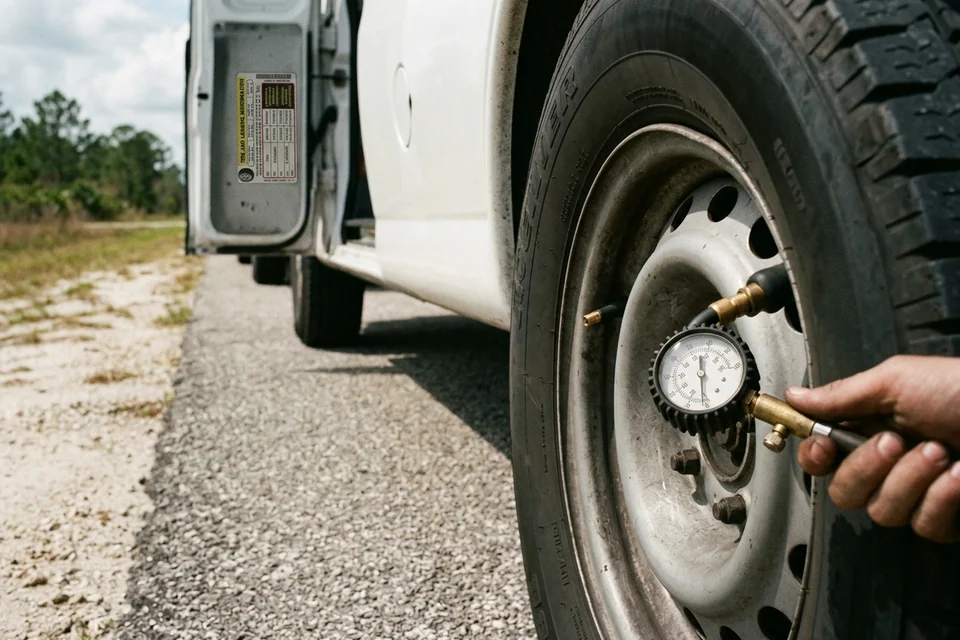
- Pressure checks on a schedule, because low pressure is the quiet cause of most failures
- Rotations and inspections before the tire becomes a roadside call
- A number your drivers can call when a tire goes down on a route
- Records by vehicle so you know what is on each wheel and when it went on
What a program covers
What a Fleet Tire Program Actually Covers
A fleet tire program is four things done on purpose: pressure checks, rotations and inspections, roadside response for drivers, and a record of every tire by vehicle. Most fleets do one or two of these by accident. The program makes all four routine.
The point is uptime. Tires are a small line on a fleet budget, but a tire failure takes a vehicle, a driver, and a day's work off the road at once. Pressure is the first lever: low pressure builds heat, wears the shoulders, and is the common thread in blowouts.
Emergency Mobile Tire Repair handles light-duty vehicles: cars, SUVs, pickups, vans, light trucks, and trailers. What we can cover for your fleet depends on vehicle types, tire sizes, yard location, and technician availability. We work that out on the call, not on a brochure.
Why downtime
Why Downtime Drives the Cost
A down vehicle is a missed route
The driver's day, the missed stops, and the reschedule are the real bill. The tire itself is a footnote.
Low pressure is the quiet cause
Underinflation shows up as heat, shoulder wear, and the blowout you did not see coming. Scheduled checks catch it.
Rotation evens the wear
Drive wheels and loaded axles wear sooner. Rotating on a schedule stretches a set and makes failures less sudden.
Roadside response keeps the route alive
A driver with a number to call and a plan loses hours, not a day. The plan is agreed before the first flat.
On the call
What to Discuss on the Call
Vehicle count and types
How many vehicles, and what they are: vans, pickups, SUVs, light trucks, trailers. Heavier units depend on tire size and equipment.
Tire sizes across the fleet
A list of sizes, or a sidewall photo per vehicle type, tells us what a mobile unit can handle.
Yard location and access
Where the fleet parks overnight, and whether a technician can work there. A yard inside our service area is the starting point.
Roadside response for drivers
What drivers say when they call: vehicle number, location, spare or no spare. The same call-first process we use for everyone.
No pricing structure or account terms are published here. We explain pricing before any work begins, and quotes are estimates until the technician sees the tire.
Step by step
How the Conversation Goes
- 01
Tell us about the fleet
Count, types, sizes, yard location, and the tire problems you are seeing now.
- 02
We talk through what we can cover
Light-duty vehicles in our area are the clear fit. Anything heavier gets an honest yes or no by tire size and equipment.
- 03
Agree a rhythm, then adjust
Checks on a schedule that fits the yard, roadside response on the same number. The first checks show the real condition, and the plan follows.
Decide
In-House Checks, Shop Visits, or a Mobile Program
| Criteria | Driver and in-house checks | Shop visits | Mobile fleet program |
|---|---|---|---|
| Who does the pressure checks | Drivers, when they remember | The shop, on the day the vehicle is in | A technician in your yard on a schedule |
| What you pay for beyond the tire | Driver time, and the misses when checks slip | The drive, the wait, and a second visit when a tire is not in stock | The trip to the yard and the work that qualifies |
| Still the right call when | Small fleets with a careful driver who owns the task | Alignment, balancing, or work a mobile unit does not do | Light-duty fleets where a parked vehicle means a missed route |
Who does the pressure checks
- Driver and in-house checks
- Drivers, when they remember
- Shop visits
- The shop, on the day the vehicle is in
- Mobile fleet program
- A technician in your yard on a schedule
What you pay for beyond the tire
- Driver and in-house checks
- Driver time, and the misses when checks slip
- Shop visits
- The drive, the wait, and a second visit when a tire is not in stock
- Mobile fleet program
- The trip to the yard and the work that qualifies
Still the right call when
- Driver and in-house checks
- Small fleets with a careful driver who owns the task
- Shop visits
- Alignment, balancing, or work a mobile unit does not do
- Mobile fleet program
- Light-duty fleets where a parked vehicle means a missed route
We explain pricing before any work begins. Quotes are estimates until the technician sees the tire.
For your drivers
Fleet Tire Basics Your Drivers Should Know
Pressure by the placard, per vehicle
Every vehicle has a placard on the driver's door jamb with the correct pressure. Vans and pickups often run different front and rear numbers, and trailers have their own. Tire pressure falls as temperature falls, so a cool morning check reads lower than an afternoon one.
What an inspection looks for
- Shoulder wear on both edges, which usually means underinflation
- One-sided wear, which points to alignment, not tires
- Nails, screws, and cuts, especially on vehicles that work job sites
- Sidewall cracks and the DOT date code on trailers that sit
What we do not publish
There is no fleet pricing structure, account terms, or promised response window on this page. Those come out of a conversation about your fleet, not a brochure. Emergency Mobile Tire Repair explains pricing before any work begins.
What we can confirm today, and what to ask on the call
- The site lists cars, SUVs, pickups, work vans, light trucks, and trailers, depending on tire size and availability.
- Work vans and light commercial vehicles are named on the site. Fleet accounts are not.
- Call first with the vehicle, the tire size, and the location. You get an honest yes or no on the phone.
- Pricing is explained before work begins. Quotes are estimates until the technician inspects the tire on site.
- Coverage is Lake, Orange, Osceola, Polk, Seminole, and Sumter counties, from Clermont and Four Corners.
Ask on the call:
- Which commercial vehicles beyond light trucks and trailers
- Fleet terms for repeat calls
- Who supplies replacement tires for a fleet
- Balancing on site
Fleet questions
Fleet Tire Questions
Do you offer fleet tire service?
Tell us about the fleet and we talk through what we can cover. Light-duty vehicles in our service area are the clear fit. Anything heavier depends on tire size, equipment, and technician availability.
Can you come to our yard, job site, or lot?
Yes. We regularly help at workplaces, job sites, lots, and hotels. A yard in Lake, Orange, Osceola, Polk, Seminole, or Sumter county is the starting point.
Do prices change after hours?
After-hours and long-distance jobs may vary. We explain pricing before work begins. Fleet work is no different.
Keep reading
Related Pages
- Commercial tire serviceThe parent page: trucks, RV, forklift, and fleet work.
- Truck tire repairPickups and light trucks that make up most working fleets.
- Forklift tiresWhy most forklift tire work is shop work.
- RV tire serviceAge and weight decide most motorhome calls.
- Box truck tire repairCutaway and straight trucks.
- Tire rotationWhy and when a set gets rotated, where available.
- Check your service areaEnter a ZIP or city to see if we cover your yard.
Tell Us About the Fleet
Call Emergency Mobile Tire Repair at (352) 531-6319 with the vehicle count, types, and yard location. We talk through what we can cover and explain pricing before any work begins.
(352) 531-6319