
Tire Mounting and Balancing
Mounting and Balancing, Explained
Mounting puts a new tire on your wheel. Balancing keeps that wheel from shaking at speed. Emergency Mobile Tire Repair offers mobile tire mounting where available. Balancing is an ask on the call, because it depends on the equipment on the unit that day.
- Mounting on site where available, depending on tire size and equipment
- Balancing: ask on the call, and you get a yes or no before anyone rolls
- A shimmy at highway speed usually points to balance, not alignment
Two different jobs
Mounting Is Not Balancing
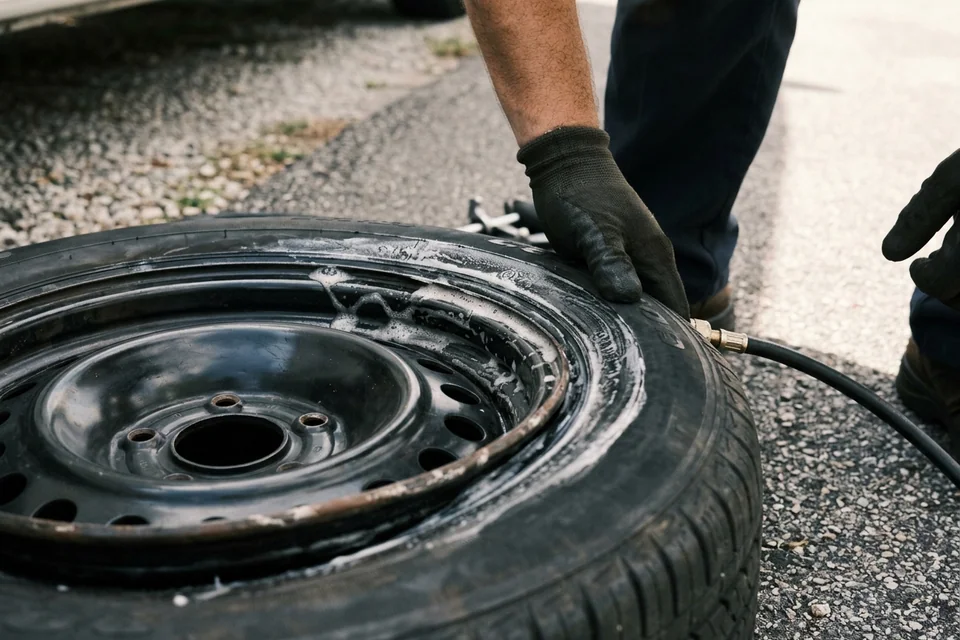
Mounting means taking the old tire off the wheel and seating a new one. The beads pop into place on the rim, the valve stem is checked or replaced, and the tire is inflated to the door placard pressure.
Balancing comes after. Every tire and wheel has a slightly heavier spot. A balancer spins the assembly, finds it, and a small weight on the rim cancels it out. Without that weight the wheel shakes as it turns.
A shop does both on dedicated machines. A mobile unit can carry a mounting machine. A balancer is less common on a van, which is why we ask you to confirm it on the call rather than promise it here.
Why balance matters
What Balancing Does for the Car
Stops the shake at speed
An out-of-balance wheel shows up as a shimmy in the steering wheel or the seat, often worst at one speed and smoother above or below it.
Evens out tread wear
A wheel that hops as it spins wears the tread in patches, called cupping. Caught early, a balance saves the tire.
Protects suspension parts
Constant vibration works on shocks, wheel bearings, and tie rod ends. Balancing is the simpler fix, so it comes first.
Keeps a new tire new
A tire mounted without balancing wears unevenly from the first mile. Industry practice is to balance every time a tire goes on a wheel.
Van versus shop
What a Van Can and Cannot Do
Mount a tire where available
Old tire off, new tire seated at your car, when the unit with the mounting equipment is available and the tire size fits it.
Balance by request
Mobile balancing depends on the equipment on the unit that day. Ask on the call and we answer yes or no before dispatching.
Replace the valve stem
A rubber stem ages and cracks. Checking or replacing it while the tire is off is a stated service.
Learn moreWhat a shop adds
Road force balancing, a full alignment, and old tire disposal are shop work. A shake that survives a balance usually needs the alignment rack.
Your tire or ours
Bring the tire you bought, or ask us about sourcing one. We confirm the size from the sidewall before anyone rolls.
Learn more
Mounting needs a flat, firm spot with room to work, not a highway shoulder. Quotes are estimates until the technician sees the tire.
The call to the car
How a Mobile Mount Works
- 01
Tell us the size and the spot
Read the sidewall or send a photo. Say whether you already have the new tire and where the car is parked.
- 02
Hear what we can do that day
Mounting where available, balancing if the equipment is on the unit. Pricing is explained before work begins.
- 03
Old tire off, new tire on
The wheel comes off, the old tire comes off the wheel, the stem is checked, and the new tire is seated and inflated to the placard.
- 04
Torque and a test drive
Lug nuts torqued in a star pattern. Drive it and listen. A shimmy at speed means balancing is the next step.
Decide
Mobile Mount, Tire Shop, or Tow?
| Criteria | Mobile mounting | Drive to a tire shop | Tow to a shop |
|---|---|---|---|
| Choose it when | You have the tire, a firm flat spot, and want to skip the trip | You need balancing confirmed, an alignment, or four tires at once | The car cannot be driven and a mobile unit cannot reach it safely |
| What you pay for | The trip to you and the labor, explained before work begins | The shop's labor, plus your time getting there and waiting | The tow and the shop, often across two stops |
| Balancing | Ask on the call. Depends on the equipment that day | Standard on every mount | Standard on every mount |
Choose it when
- Mobile mounting
- You have the tire, a firm flat spot, and want to skip the trip
- Drive to a tire shop
- You need balancing confirmed, an alignment, or four tires at once
- Tow to a shop
- The car cannot be driven and a mobile unit cannot reach it safely
What you pay for
- Mobile mounting
- The trip to you and the labor, explained before work begins
- Drive to a tire shop
- The shop's labor, plus your time getting there and waiting
- Tow to a shop
- The tow and the shop, often across two stops
Balancing
- Mobile mounting
- Ask on the call. Depends on the equipment that day
- Drive to a tire shop
- Standard on every mount
- Tow to a shop
- Standard on every mount
After-hours and long-distance jobs may vary. We explain pricing before any work begins.
Know before you call
Mounting and Balancing Facts
Why a wheel shakes at one speed
Every spinning part has a speed where a small imbalance gets amplified. For a car wheel that often lands near highway speed. Slow down or speed up and the shake fades. A shake only under braking points to the brake rotors instead.
Why balancing cannot fix everything
- A wheel bent by a pothole shakes no matter how it is weighted
- A tire with a belt shift or a bulge needs replacement, not a balance
- A pull to one side is an alignment problem, which is shop work
Mounting the right way
Direction and side matter. Directional tires have an arrow on the sidewall, and asymmetric tires say Outside on one face. A pressure sensor sits right where the bead breaker works, so tell us if the wheel has one.
Mounting questions
Mounting and Balancing Questions
Do you mount tires on site?
We offer mobile tire mounting where available. It depends on tire size, the equipment on the unit, and technician availability. Call with the size and the location and we confirm before anyone rolls.
Can you balance the tire too?
Ask on the call. Balancing depends on the equipment on the unit that day. If we cannot balance on site, we say so, and any tire shop can balance it afterward.
What if I don't know my tire size?
No problem. Send a photo of the tire sidewall or call us and we help you read it.
Do prices change after hours?
After-hours and long-distance jobs may vary. We explain pricing before work begins.
Keep reading
Related Pages
- Mobile tire installation and maintenanceMounting, rotation, swaps, and sensors in one place.
- Tire rotationPatterns, timing, and what a rotation reveals.
- Seasonal tire swapWhy Florida skips winter tires, and when a swap fits.
- TPMS sensor serviceThe sensor as a part: replace versus relearn.
- Mobile tire replacementWhen the tire has to be sourced before it can be mounted.
- All mobile tire servicesRepair, replacement, spares, and roadside extras.
- Check your service areaEnter a ZIP or city to see if we cover you.
Need a Tire Mounted Where You Are?
Call Emergency Mobile Tire Repair at (352) 531-6319 with the tire size and where the car is parked. We tell you whether mounting and balancing are on the table that day, with an honest ETA when a technician is available.
(352) 531-6319