
Seasonal Tire Swap
No Winter Tire Season Here
Central Florida does not get the sustained cold that winter tires are built for, so there is no snow season to swap for. A tire swap still makes sense in a few situations, covered here. Emergency Mobile Tire Repair tells you on the call what we can do at your car.
- Moved from the north with winter tires on? They wear down on hot roads and grip poorly in the wet
- A second set of wheels, mismatched tires, or a set stored for another vehicle
- Swap on site: ask on the call, depending on tire size and equipment
The climate
Why Florida Skips the Winter Swap
Winter tires use a soft rubber compound that stays flexible below freezing. On warm pavement that compound wears away and feels squirmy. This region does not see the sustained cold that makes the trade worth it.
All-season tires handle the year here. The swap most drivers make is simply old for new. The seasonal question becomes a rain question: do your tires have the tread depth for a summer storm?
A swap still makes sense when you have two sets. Swapping complete wheels is an ask on the call. Swapping tires on the same wheels is mounting work, which depends on tire size, equipment, and technician availability.
When it fits
When a Swap Still Makes Sense
Winter tires in Florida heat
You moved in with winter tires still mounted. They wear down on hot roads and handle poorly in the wet. Get them off before summer.
A second set of wheels
A towing set, a set of alloys, or the wheels that came with the car. Swapping complete wheels is simpler than remounting tires.
Mismatched tires
Two brands, two tread depths, or two sizes on the same axle make the car handle unevenly. Pairing matching tires on each axle fixes it.
A set stored for another vehicle
Tires kept for a second car or a trailer, or ones that sat for months. Age and storage matter, so we check the date code and sidewalls first.
Storage and age
What Changes When Tires Sit
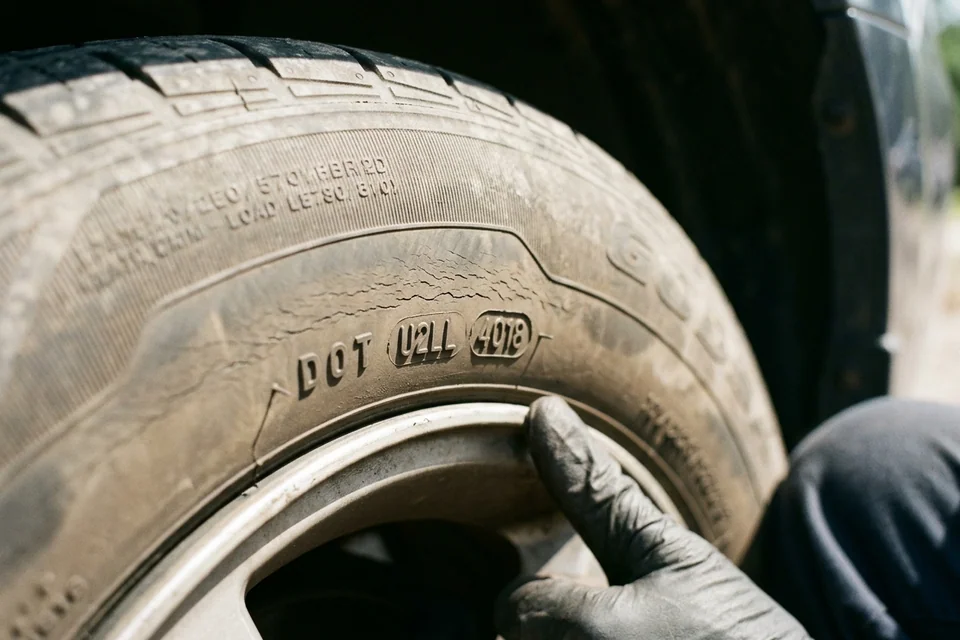
Read the date code
The last four digits of the DOT code give the week and year the tire was made. The tire maker's owner's manual guidance advises inspection after six years and replacement by ten, even with tread left.
Heat and sun
Tires stored in a hot garage or out in the sun age more than tires in use. Cracks in the sidewall and between the tread blocks are the sign.
Flat spots
A tire that sat loaded for months can develop a flat spot. Some work out after a few miles of driving. Some do not.
Not every stored tire is usable
Cracked sidewalls, cord showing, or a tire past its age is a replacement, not a swap. We say so before any work starts.
Learn more
Repair availability depends on tire condition, damage location, tire size, and safety. If the tire cannot be safely repaired, we help with the next best option.
On site
How a Swap Visit Goes
- 01
Describe both sets
Tell us the tire size on the car, the size of the stored set, whether they are on wheels, and where the car is parked.
- 02
Hear yes or no
Complete wheels swap on site when a technician is available. Tires alone need mounting equipment, so that is a separate yes or no.
- 03
Inspect the stored set
Date code, sidewall cracks, tread depth, and pressure. Anything that fails the look does not go on the car.
- 04
Swap, torque, and pressure
Wheels on, lug nuts torqued in a star pattern, pressure set to the placard. If the second set has its own sensors, the car may need a relearn.
Decide
Swap Wheels, Remount Tires, or Replace?
| Criteria | Swap complete wheels | Remount tires on your wheels | Replace with new |
|---|---|---|---|
| When it fits | Both sets are on their own wheels and both are in usable condition | You have tires but only one set of wheels | The stored set is cracked, aged out, or worn past the wear bars |
| On site? | Ask on the call, depending on technician availability | Where available, depending on tire size and equipment | Replacement labor where we are, once the tire is sourced |
| What you pay for | The trip and the labor, explained before work begins | The trip plus mounting labor per tire | The tires and the labor, quoted once we know the size |
When it fits
- Swap complete wheels
- Both sets are on their own wheels and both are in usable condition
- Remount tires on your wheels
- You have tires but only one set of wheels
- Replace with new
- The stored set is cracked, aged out, or worn past the wear bars
On site?
- Swap complete wheels
- Ask on the call, depending on technician availability
- Remount tires on your wheels
- Where available, depending on tire size and equipment
- Replace with new
- Replacement labor where we are, once the tire is sourced
What you pay for
- Swap complete wheels
- The trip and the labor, explained before work begins
- Remount tires on your wheels
- The trip plus mounting labor per tire
- Replace with new
- The tires and the labor, quoted once we know the size
Quotes are estimates until the technician sees the tires. After-hours and long-distance jobs may vary.
Know before you call
Tire Swap Facts for This Climate
All-season versus summer tires
All-season tires cover the year in this climate. Summer tires grip harder on dry roads and stay firm in the heat, though some dislike the rare cold snap. Either works here. Winter tires do not.
Storing a second set
- Cool, dry, and out of the sun. A closet beats a hot garage, and both beat the yard
- Clean and bagged, so ozone and oil do not work on the rubber
Mixing tires
Same size, type, and tread depth on an axle is the rule. Pairing a new tire with a worn one on the drive axle can upset all-wheel-drive systems, and many manufacturers say to replace all four on those cars. Ask before you swap two.
Swap questions
Seasonal Swap Questions
Do I need winter tires in Central Florida?
No. Winter tires are built for sustained cold and snow, and this region has neither. All-season tires cover the year. If you arrived with winter tires on, plan to swap them off.
Can you swap my stored set on site?
Ask on the call. Complete wheels can be swapped where a technician is available. Tires on the same wheels need mounting equipment, which depends on tire size and what is on the unit that day.
What if I don't know my tire size?
No problem. Send a photo of the tire sidewall or call us and we help you read it.
What if I'm outside your normal service area?
Call anyway. Depending on time, availability, and your situation, we may make an exception or point you to the right help.
Keep reading
Related Pages
- Mobile tire installation and maintenanceMounting, rotation, swaps, and sensors in one place.
- Tire mounting and balancingGetting a tire on the wheel and stopping the shake.
- Tire rotationPatterns, timing, and what a rotation reveals.
- TPMS sensor serviceThe sensor as a part: replace versus relearn.
- Tire and roadside glossaryDOT code, placard pressure, wear bars, and more.
- All mobile tire servicesRepair, replacement, spares, and roadside extras.
- Check your service areaEnter a ZIP or city to see if we cover you.
Have a Second Set That Needs to Go On?
Call Emergency Mobile Tire Repair at (352) 531-6319 with both tire sizes and where the car is parked. We tell you whether a swap on site is on the table, and we check the stored set before anything goes on.
(352) 531-6319